Feature: Italian researcher builds cultural bridge via Tianjin glass painting
2026-07-06 11:26 Xinhua
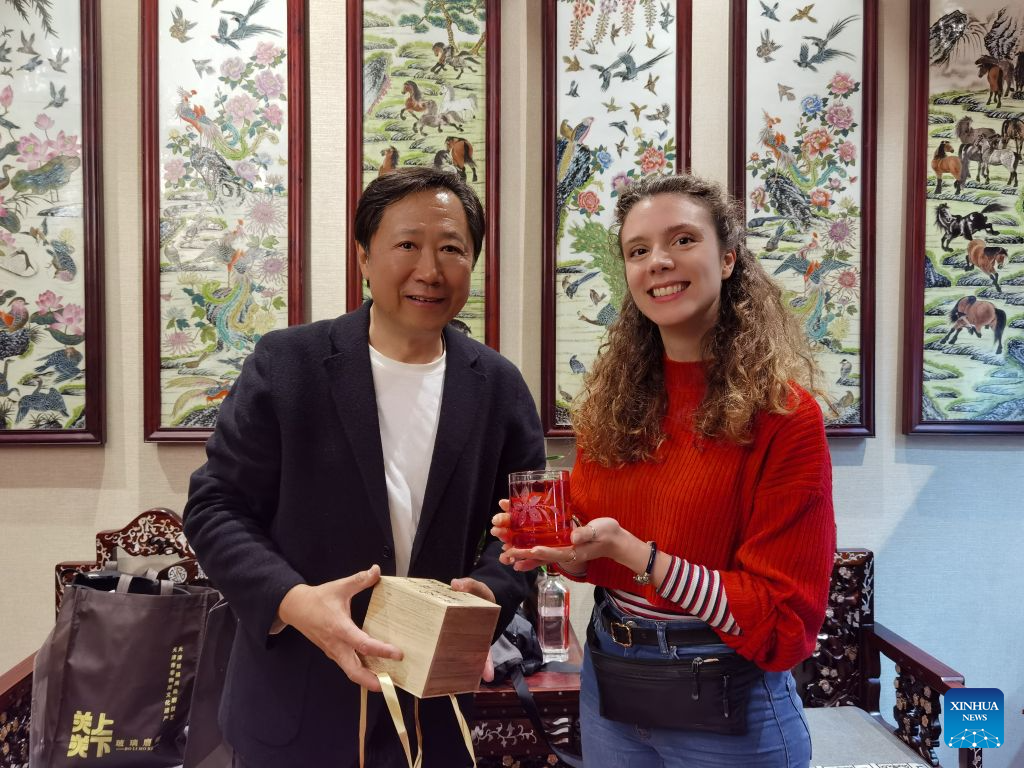
Laura Maria Cinquini (R), an Italian Ph.D candidate in world history at the University of Turin, and Zhang Chunlin, a representative inheritor of a Tianjin intangible cultural heritage item, pose for a photo in Tianjin, north China, April 17, 2026. (Xinhua)
TIANJIN, July 4 (Xinhua) -- Laura Maria Cinquini, an Italian PhD candidate in world history at the University of Turin, has returned to Tianjin, a municipality in northern China, to continue her research on Chinese glass painting.
Her latest visit brought her back to Zhang Chunlin, a representative inheritor of a Tianjin intangible cultural heritage item, involving glass painting techniques of dyeing, etching and grinding.
Cinquini's research focuses on modern and contemporary Chinese glass painting. "I have been studying this field for several years, trying to trace the overall historical thread of this painting tradition. While previous scholars have mostly concentrated on ancient glass paintings, I am more interested in its modern and contemporary development," she said.
Glassmaking dates back to ancient Egypt and later spread to Italy through the Roman Empire, with Italy having played a significant role in the history of glass painting.
This art form was introduced to China by missionaries and gradually merged with traditional Chinese painting techniques, forming a distinctive Chinese glass painting style.
In the 1920s and 1930s, glass paintings became a common sight in Chinese households, often presented as popular gifts for weddings and business openings. Tianjin's glass painting industry remained prosperous until the 1980s and was once an important category of Chinese export paintings, before later losing much of its export appeal.


