Tajik wedding embodies rural revitalization achievements on Pamir Plateau
2026-07-10 14:57 Xinhua
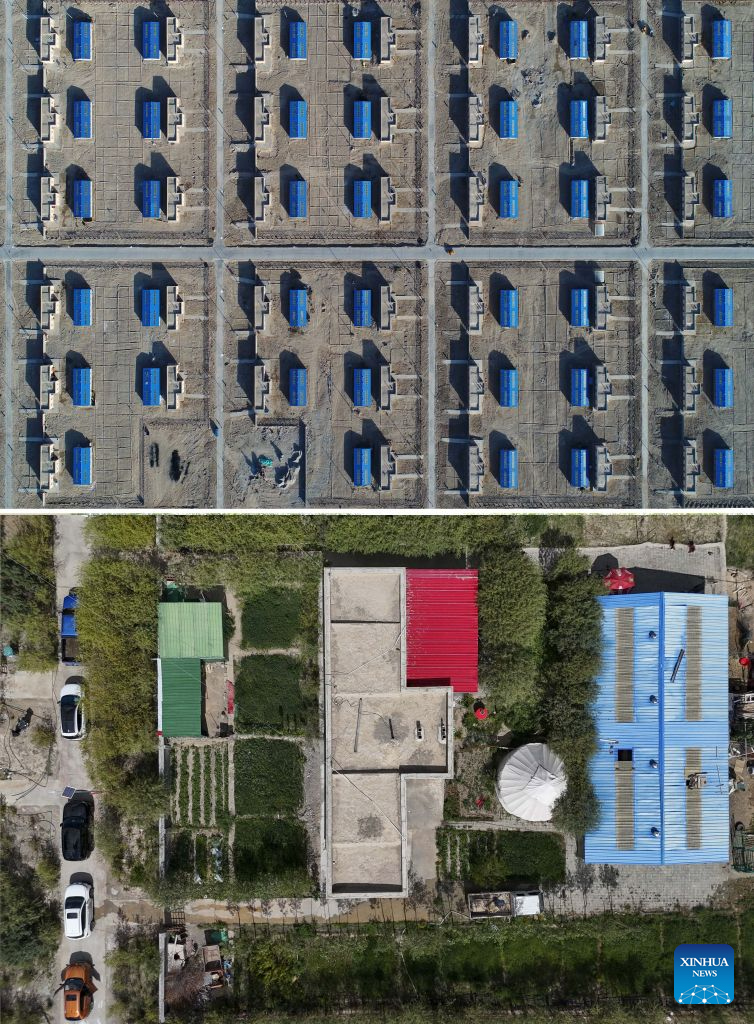
This combo photo shows an aerial view of the village at the relocation site right after Duri Jarman resettled in Taxkorgan Tajik Autonomous County, northwest China's Xinjiang Uygur Autonomous Region, Nov. 19, 2018 (above, drone photo) and an aerial view of the lush courtyard of Duri Jarman in Taxkorgan Tajik Autonomous County, northwest China's Xinjiang Uygur Autonomous Region, June 30, 2026 (below, drone photo). This summer, happiness filled the air around the home of herdsman Duri Jarman. His youngest son Nurkerim tied the knot with his beloved woman. Weddings of the Tajik ethnic group usually last three days. Inscribed on the national intangible cultural heritage list in 2008, the wedding customs of the Tajik ethnic group maintain unique traditions and are always described as festivals of music, dance and food to showcase the resplendent newlyweds and their propitious marriage.
In Aimin Village, this wedding also serves as a vivid epitome of the eight-year transformative leap brought by the poverty alleviation relocation program.
In the winter of 2018, Jarman and his family benefited from the relocation policy for poverty alleviation and settled in Aimin Village. They gradually adapted to the changes, enjoying a new life different from that of their ancestors. Jarman ran a small grocery store with Nurkerim, while his eldest and second sons both landed stable new jobs. Nurkerim also bought a pickup truck to run a transport business. It was this business that brought him together with his wife. For this family, the relocation is not only an opportunity for development, but also a path leading to happiness.
