Exhibition bridges gap between centuries-old Chinese encyclopedia, public
2026-09-07 17:02 Xinhua
That reaction echoes the goal of the exhibition. Song Xuejuan, who heads the digitization project, said the exhibition "transforms 'static preservation' into 'dynamic sharing', and turns an academic treasure into a public experience."
For a long time, there was a disconnect between traditional culture and younger generations. In recent years, however, new technologies, fresh perspectives, and innovative storytelling have helped connect ancient heritage with contemporary trends.
The Mogao Caves, a UNESCO World Heritage Site dating back to the 4th century, also in Gansu, are an example. In the 1980s, local researchers began exploring digital documentation. Today, they have completed high-precision digital capture of 323 caves. The images rendered on screen are now even clearer than what the naked eye can see on site, revealing details that once required climbing ladders to inspect.
Another example is the immersive interactive digital exhibition of oracle bone inscriptions, held in Tianjin in April. Using artificial intelligence and mixed reality technologies, it allowed visitors to experience the ancient ritual of oracle bone divination.
The Lanzhou gallery said it had previously received only a few hundred visitors per day on average. But since this new image exhibition launched, it has seen attendance surge to over 3,000 on peak days. Among the crowds were many children accompanied by parents.
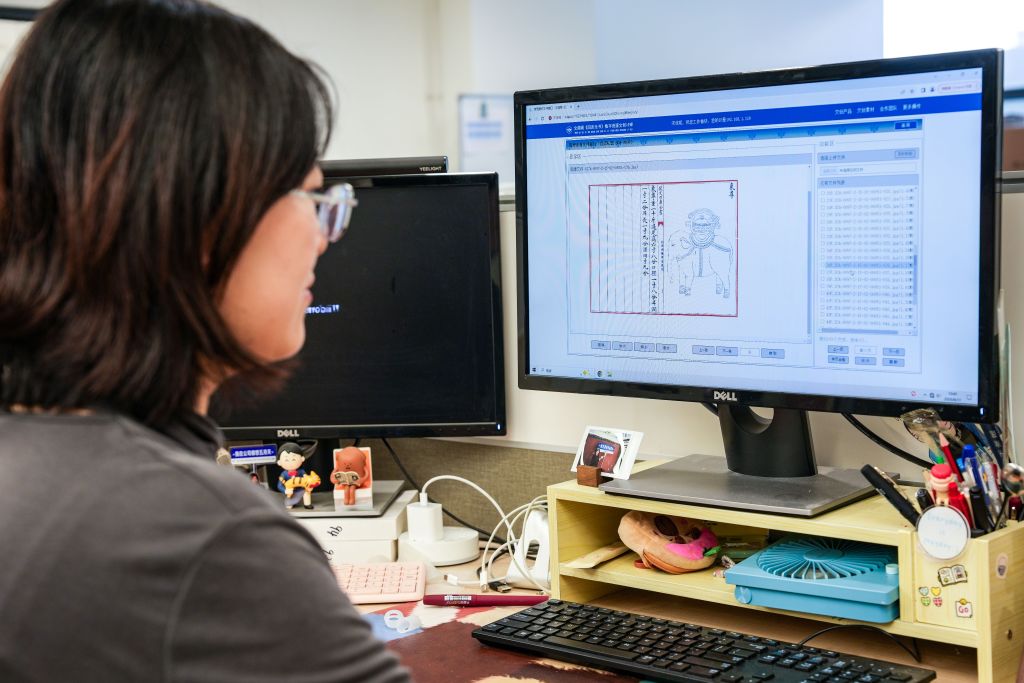
Editor Song Jia'ni reviews a digital copy of the Siku Quanshu, or The Complete Library of the Four Treasuries, in Lanzhou, northwest China's Gansu Province, Sept. 2, 2026. (Xinhua/Lang Bingbing)


