Column: Small producers, big markets -- the CIIE story
2026-11-02 17:18 Xinhua
In July 2025, Burundi shipped 38.4 tonnes of Arabica coffee directly to China for the first time, followed by contracts exceeding 900 tonnes worth over 5 million U.S. dollars.
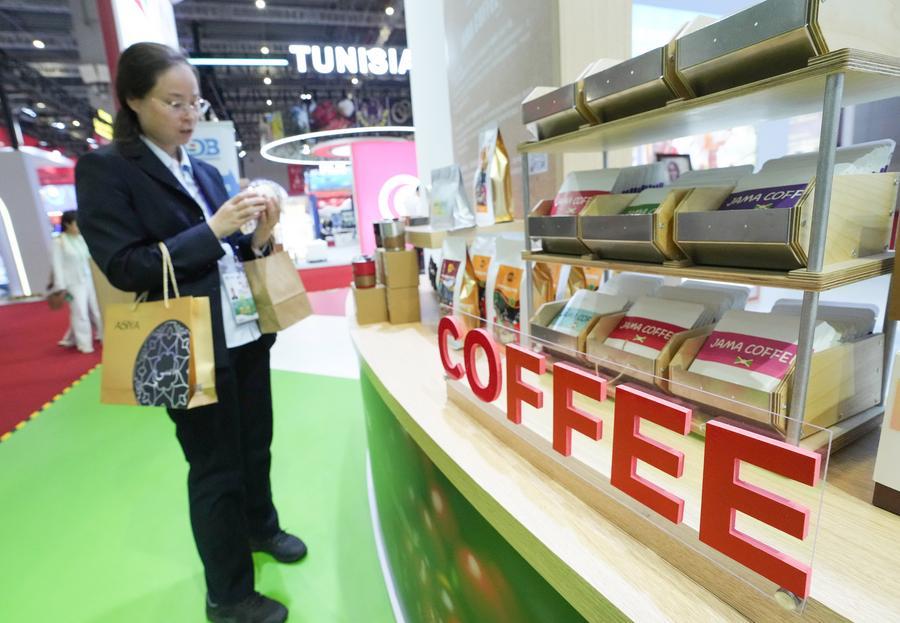
A visitor learns about coffee at the pavilion of Burundi during the eighth China International Import Expo (CIIE) in east China's Shanghai, Nov. 7, 2025. (Xinhua/Ren Pengfei)
At the seventh CIIE in 2024, 13 of 16 participating Nigerian companies reportedly secured agreements, including a cocoa contract worth over 1.2 million dollars.
The eighth CIIE last year recorded 83.49 billion dollars in one-year intended deals, up 4.4 percent from the previous edition and hitting a new high.
Smaller economies face structural disadvantages in international trade. Regulatory compliance, logistics, marketing, and distribution impose disproportionately high costs on low-volume exporters. By connecting buyers and sellers and facilitating market entry, the CIIE helps reduce these barriers.
The CIIE offers one practical model for smaller economies to access international markets. For artisans in Peru, farmers in Kenya, and herding communities in Madagascar, the benefits can extend beyond export contracts to employment, household incomes and local development.
Inclusive globalization should be measured not simply by how much trade expands, but by how widely its opportunities are shared.
It is an approach worth drawing on.
Editor's note: Maya Majueran serves as the director of the Belt and Road Initiative Sri Lanka, an independent and pioneering organization with strong expertise in Belt and Road Initiative advice and support.