Feature: Seeds of unity, prosperity take root in Xinjiang’s Pomegranate Lane
2026-11-05 17:14 Xinhua
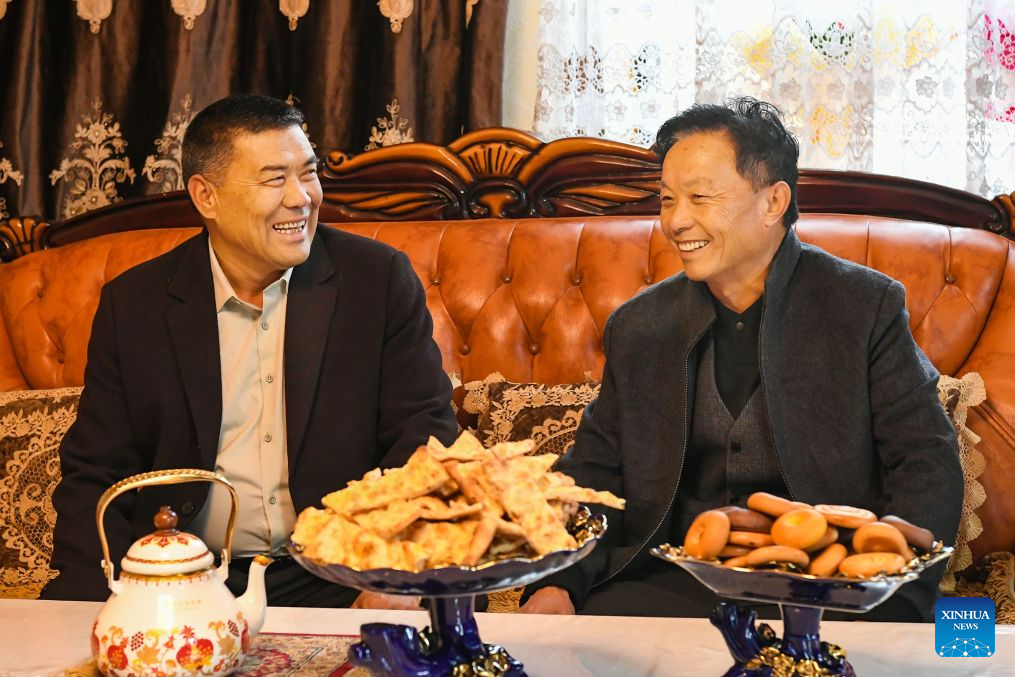
Ablekim Musa (L) and Zhou Jinshan talk in Daxi Village, Yuli County, northwest China's Xinjiang Uygur Autonomous Region, Nov. 2, 2026. (Photo by Yuetikeer Nijiati/Xinhua)
URUMQI, Nov. 4 (Xinhua) -- With the cotton-picking season underway in Xinjiang Uygur Autonomous Region in northwest China, Zhou Jinshan, 62, has already finished machine-harvesting his own fields. However, his work is far from over.
After arranging a machine for his neighbor, Ablekim Musa, to harvest cotton, Zhou plans to send another machine to deep-plow the Uygur farmer's fields as winter approaches, preparing the land for spring sowing next year.
For Zhou, helping Ablekim comes naturally. "We are as close as brothers, even closer than real brothers," he said.
Zhou and Ablekim live in Pomegranate Lane in Daxi Village of Yuli County. Stretching about 800 meters, this lane accommodates 18 households from both the Han and Uygur ethnic groups and has long been celebrated for the warm relationships among its residents.
China is home to 56 ethnic groups, including the Han and 55 ethnic minorities that collectively account for nearly one-tenth of the country's population, according to the latest national census.
In China, the image of pomegranate seeds clustered closely together often symbolizes unity among ethnic groups. The lane in Daxi Village takes its name from this familiar metaphor.
For Zhou and Ablekim, this name is not an aspiration yet to be fulfilled, but a reality they have lived for years.
Their friendship began around two decades ago, when Zhou's car got stuck in a remote area. Ablekim, who happened to be passing by on his bicycle, helped lift Zhou out of danger.