Xiconomics: China’s vision for an open world economy in a turbulent era
2026-01-22 16:49 Xinhua
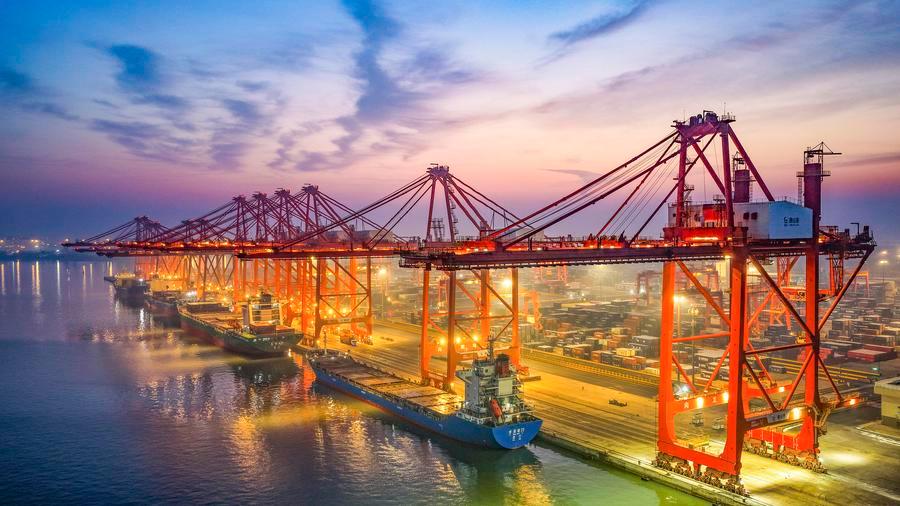
An aerial drone photo taken on Dec 15, 2025 shows vessels loading and unloading containers at a container dock of Tangshan Port in Tangshan, North China's Hebei province. [Photo/Xinhua]
BEIJING -- The 2026 World Economic Forum (WEF) Annual Meeting opened on Monday in the snowy Swiss resort of Davos. As global leaders reconvene in the Alpine town, the world economy is grappling with a familiar yet intensifying set of challenges, most notably a surge in protectionism, unilateralism and hegemonism.
Against this backdrop, the vision articulated by Chinese President Xi Jinping in multiple past speeches stands out, offering a clear and consistent compass for global economic governance, one that underscores openness and justice as fundamental anchors for stability and growth.
Translating that vision into concrete actions, China has stepped up development-oriented cooperation with other Global South countries, aligning with their shared concerns amid rising uncertainties and reinforcing calls for a more inclusive and predictable world economic order.
UNILATERALISM EXACTS HEAVY TOLL
Indeed, global economic growth faces significant headwinds as escalating unilateralism and protectionist measures dampen international trade and investment flows. Indermit Gill, the World Bank Group's chief economist, warned that the world economy is set to grow more slowly in the coming years than it did even in the troubled 1990s.
A significant factor behind this slowdown is a new round of tariffs and trade restrictions rolled out by Washington over the past year. As these measures accumulated, the average US import tariff surged from 2.4 percent in early 2025 to nearly 18 percent -- the highest level since the 1930s.


