China Focus: Ancient temple draws visitors as cultural tourism booms in Shanxi
2026-10-06 14:30 Xinhua
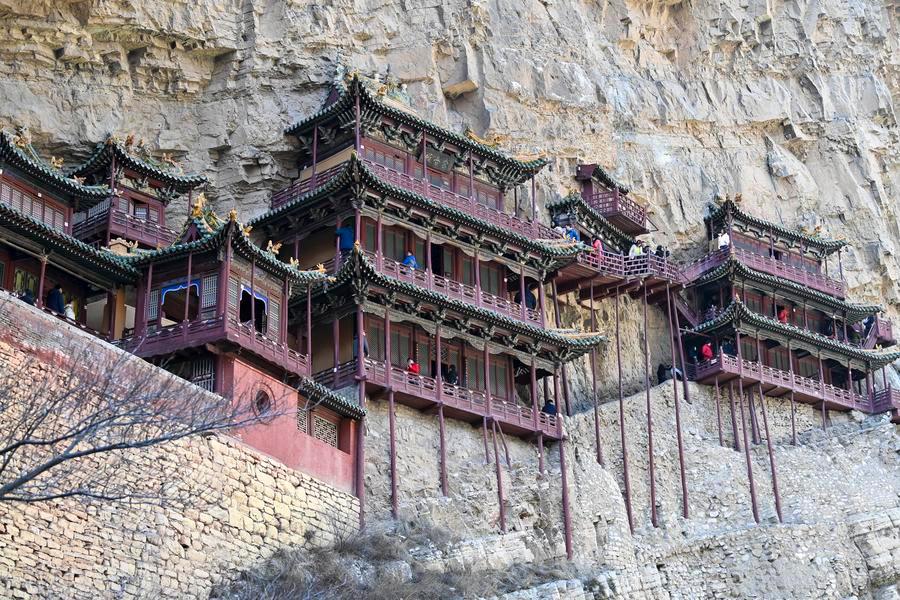
This photo taken on Feb. 28, 2025 shows the Hanging Temple, or Xuankong Temple, in Hunyuan County, Datong City in north China's Shanxi Province. (Xinhua/Yang Chenguang)
Beyond Shanxi, efforts to preserve historic architecture are also bringing old buildings closer to contemporary life. In Fujian Province, traditional Tulou, or earthen buildings, are being preserved and given new uses, while in Guizhou Province, more than 12,000 endangered traditional buildings have undergone emergency restoration.
China's latest five-year plan for cultural heritage calls for stronger systematic protection while making preservation efforts more accessible and beneficial to the public.
Wang Chunbo, a researcher specializing in ancient architecture, sculptures and murals in Shanxi, said the growing interest in historic architecture reflects a deeper engagement with traditional culture among younger Chinese.
"Young people are no longer satisfied with simply checking a destination off their list," Wang said. "Historic buildings are becoming cultural spaces they can experience, engage with and share."
Li Junda, a university student studying anthropology in London, traveled to Shanxi after encountering Yang's story online. What struck him was how the temple's history was still carried by the people around it.
"At the British Museum, I saw many Chinese artifacts on display, identified simply by their dynasties," Li said. "Here in Shanxi, the heritage is still 'alive,' because villagers like Yang are here to tell the stories behind it."


