Feature: Tibetan artisan weaves fortune, hope on plateau in China
2026-11-06 15:44 Xinhua
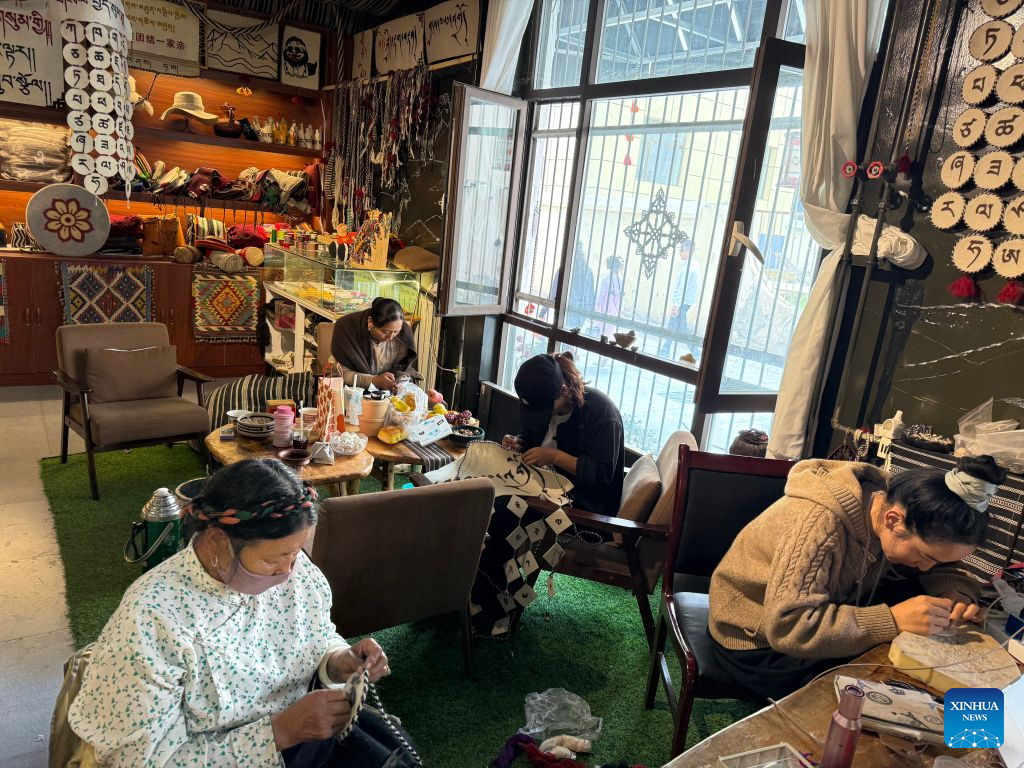
Women work at Kunga Chogyi's workshop in the Tibetan Autonomous Prefecture of Yushu, northwest China's Qinghai Province, July 26, 2026. (Xinhua)
XINING, Nov. 5 (Xinhua) -- Instead of carrying perfume or cosmetics, 36-year-old Tibetan Kunga Chogyi always tucks a bundle of yak-hair cord in her handbag whenever she travels away from home.
On a flight to Beijing for a trade fair earlier this year, Kunga Chogyi was inspired by the sunlight piercing through the clouds and wove two colorful bracelets using this cord. She sold both to the flight attendants onboard for 166 yuan (about 25 U.S. dollars) each.
"That was my first time doing business on a plane," she recalled with a smile.
Kunga Chogyi is an inheritor of Tibetan hand-weaving, an intangible cultural heritage item in the Tibetan Autonomous Prefecture of Yushu, northwest China's Qinghai Province.
Through ancient yak-hair weaving and modern livestreaming e-commerce, she has sold her crafts nationwide, attracting young customers via innovative products and empowering local women with skills and income.
LEGACY WOVEN IN THREAD
Born into a herding family in rural Yushu, Kunga Chogyi originally studied Tibetan medicine under her father. From her grandmother, she learned to weave Tibetan woolen fabric and craft traditional yak-hair tents.
Her grandmother, who raised six children, often left them at home to trek across mountains, weaving tents for other herders to make ends meet.
"When a single thread turns into a physical object, that feeling of happiness and anticipation makes you feel reborn," Kunga Chogyi said.
Before passing away, her grandmother urged her to carry on the craft. "As long as you have this skill, you won't starve," her grandmother told her.


